For those of you that have been following me for a while now, you’ll be familiar with my hashtag #fightnwrite.
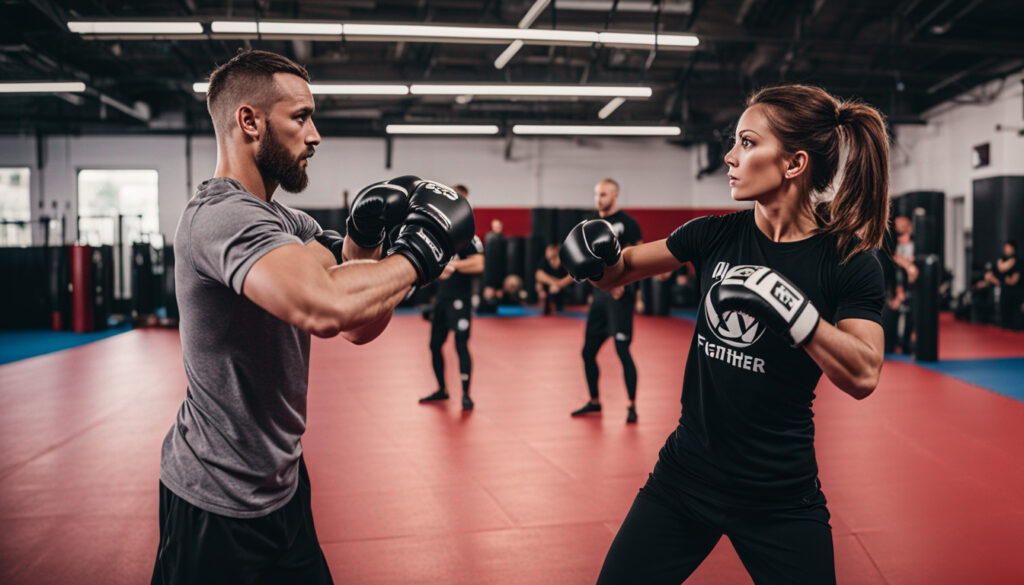
Since August this year, my Saturday routine has become Krav Maga training immediately followed by Writers’ Group at my local library. Today, I’m going to focus on Krav Maga and its significance to my worlds: real life and the ‘Care & Control’ universe.
After writing ‘Care & Control’, my mind was already on the sequel (don’t worry, it’s coming!). There would of course be a new crime plotline, but a significant part of the sequel needed to deal with the aftermath of events in the first book. I thought a lot about what the trauma would look like for Connor.
Connor is a younger teenager. He has survived, and continues to navigate, multiple Adverse Childhood Experiences (ACEs). He’s not the biggest, strongest kid in the playground; asthma puts him at a further disadvantage. He moves against a backdrop where the potential for violence is high, yet realistically his only defences are his smart mouth and quick thinking.
Connor has experienced the ultimate in powerlessness during his childhood – removal from his family to be placed in Local Authority care. Let that sit for a moment.
Powerlessness and vulnerability. These are what Connor feels in the aftermath of ‘Care & Control’. His response, in true Connor fashion, is to take responsibility for his own safety rather than leaving it to the adults around him.
As an ex-social worker, I also thought about resilience in children. The basic premise of resilience theory is that, even if one area of a child’s life is not as it should be, strength in other areas (e.g. excelling at a sport, playing a musical instrument, a positive adult) can offset the overall negative impact. Too often, we focus so much on deficits that we forget positive factors.
Enter Krav Maga.
It seemed exactly what Connor needed: a system that encourages the avoidance of a fight, but teaches how to quickly bring one to an end if avoidance isn’t an option. The techniques can still be employed effectively if the user is at a physical disadvantage to the aggressor. Krav Maga is something physical that would give him a sense of self-mastery and achievement.
As luck would have it, I discovered that a local gym offered training. In the interests of authenticity, I signed up.
I quickly realised that Krav Maga was something that I needed as well as Connor. Some post-Covid health challenges and time away from uniform had impacted on my confidence with physical confrontation.
Four months on, my confidence is back.
As a group, we spar and I get more comfortable with the discomfort of being grabbed, pushed, pulled and menaced with (fake) weapons. My natural instinct to flinch/ freeze is reducing and more helpful responses are setting into my muscle-memory. My confidence in my own strength and physical presence is returning.
Special thanks go to Tom Griffin, the owner of Trax Gym and Krav Maga teacher extraordinaire. Always generous with his time and knowledge, I’ve learnt a huge amount in a short space of time. Something more remarkable is that Trax is the first gym I’ve been to in my life where I actually feel comfortable. That’s as much to do with the cool group of people I train with as Tom’s approach to fitness – it’s a family gym and a gym family.
The experience has given me much more than I had anticipated for my original intended purpose – writing authentically about Krav Maga.
I love that Connor will have this in his life: a good place and good people to help him recover from the trauma he has suffered whilst he learns the skills to protect himself and ultimately feel less vulnerable.
Roshan
PS – Check out the link to Trax Gym in the ‘People & Places’ section of my website, or pay their Instagram or Facebook accounts a visit to see what else is on offer.
PPS – HBD Tom!